02 Porous Carbon
Coffee-ground poresthat trap odors
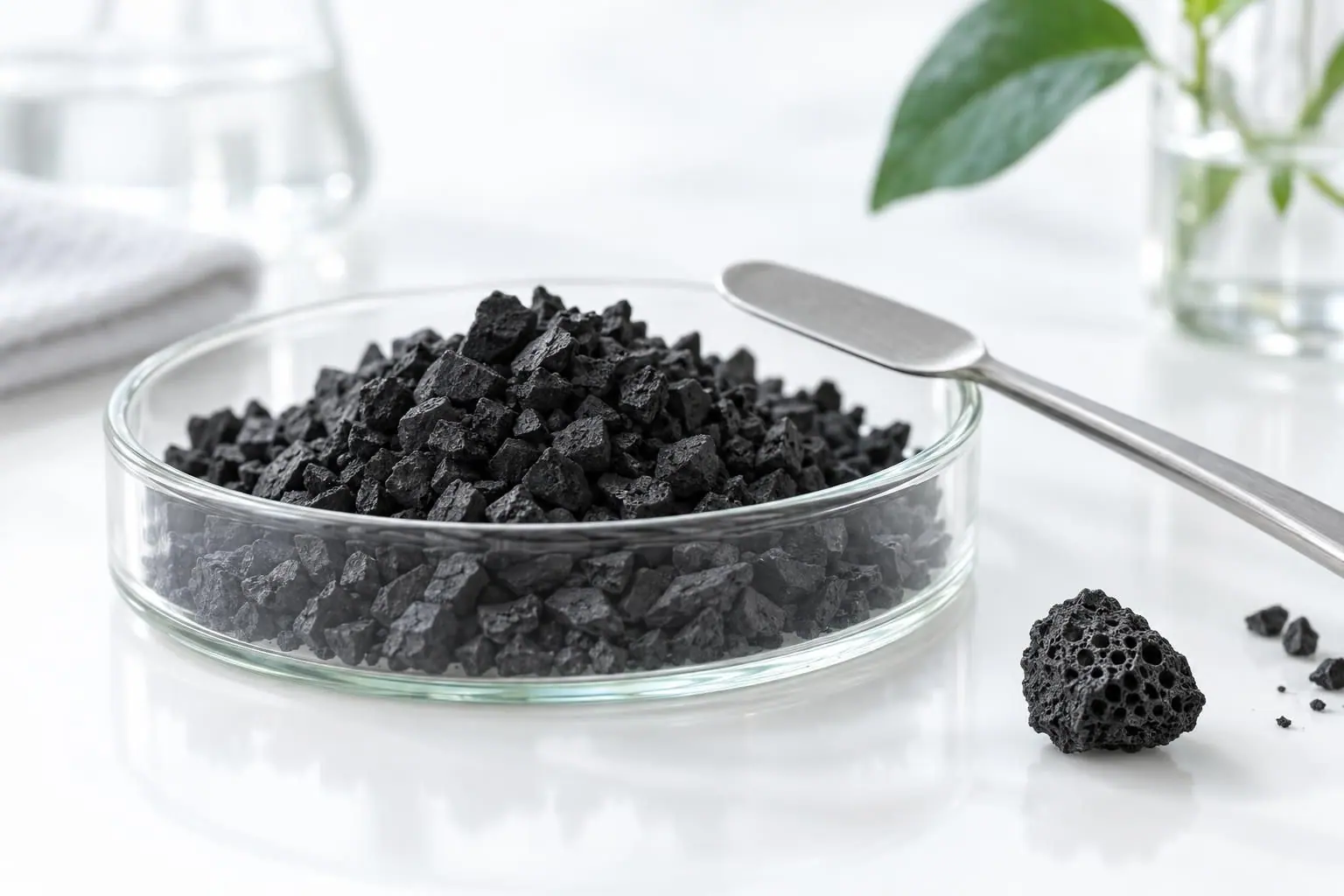
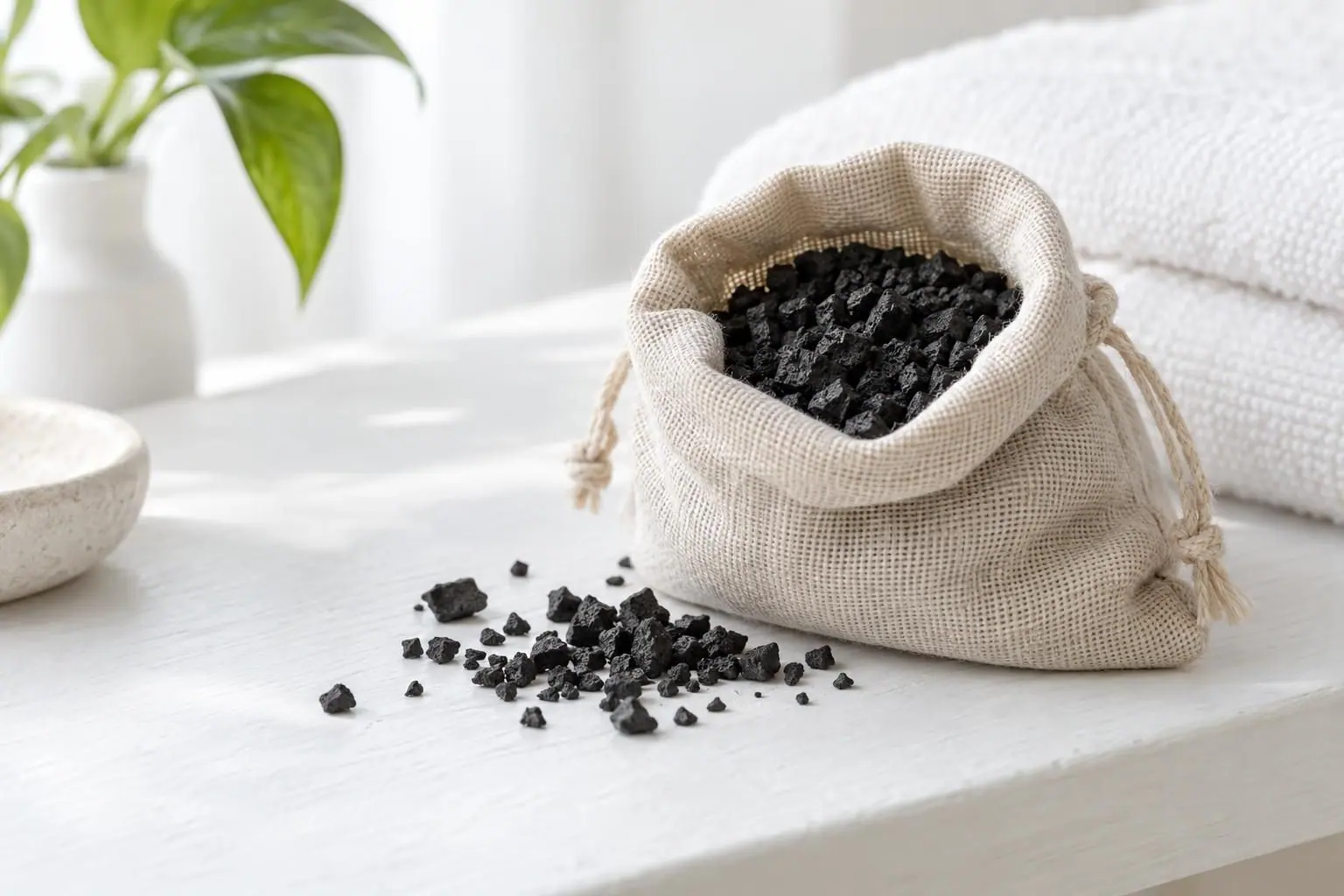
Activating coffee grounds creates carbon with both micro and meso pores, supplied as a deodorizer feedstock that traps odor molecules.
01Material
Carbon-richand easy to source
Coffee grounds from cafés were officially recognized as a circular resource in 2022.
- Carbon yield
- 40% approx.
- Coffee grounds discarded in Korea yearly
- 200,000tons
- Available within Jeonbuk (monthly)
- 1,000tons
02How It Is Made
A by-product ofthe filler process
After coffee oil is removed, activation turns the grounds into porous carbon. Nothing is left over.
-
STEP 1Raw material
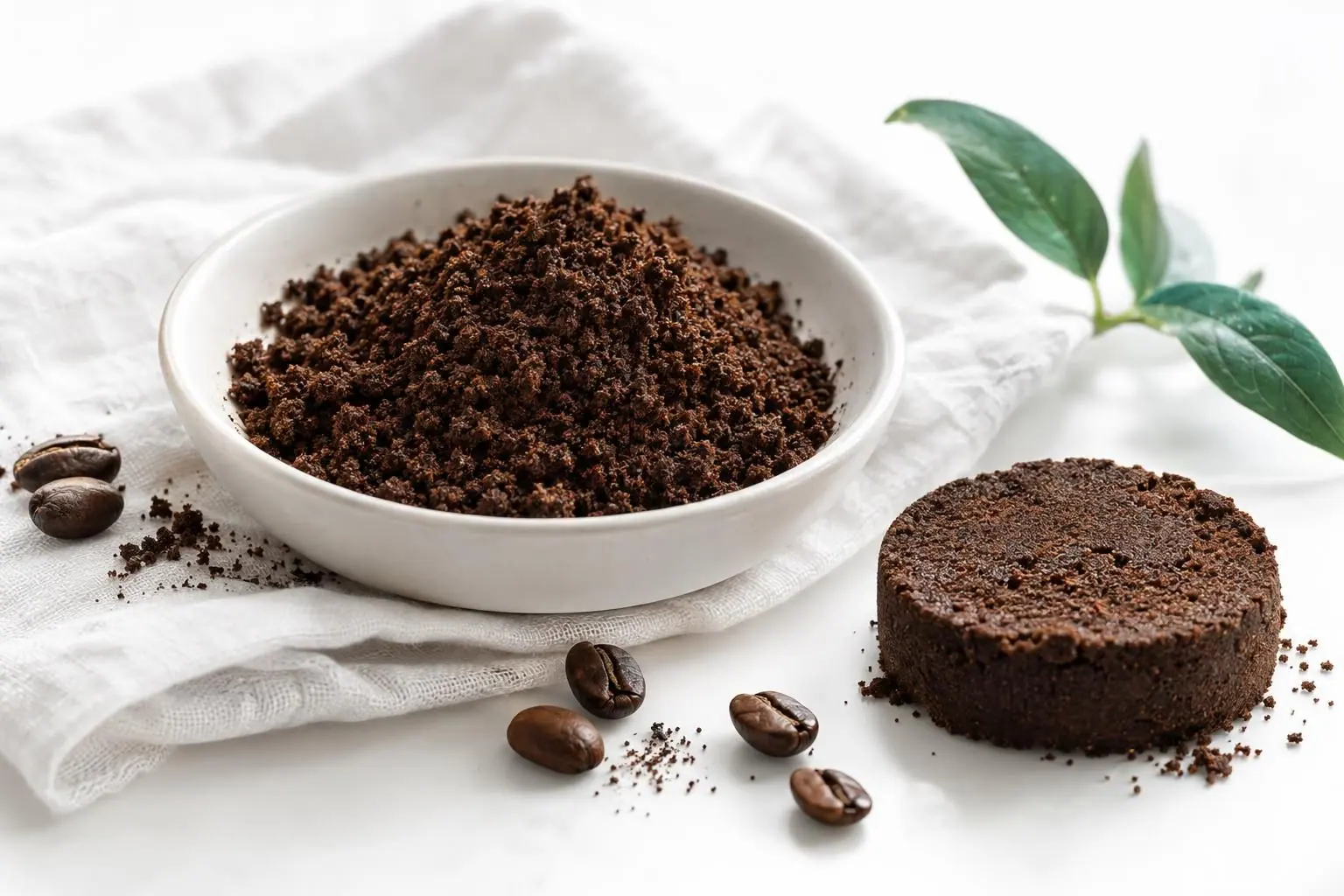
Spent coffee grounds
200,000 tons wasted in Korea every year, with ~40% carbon yield.
-
STEP 2Defatting
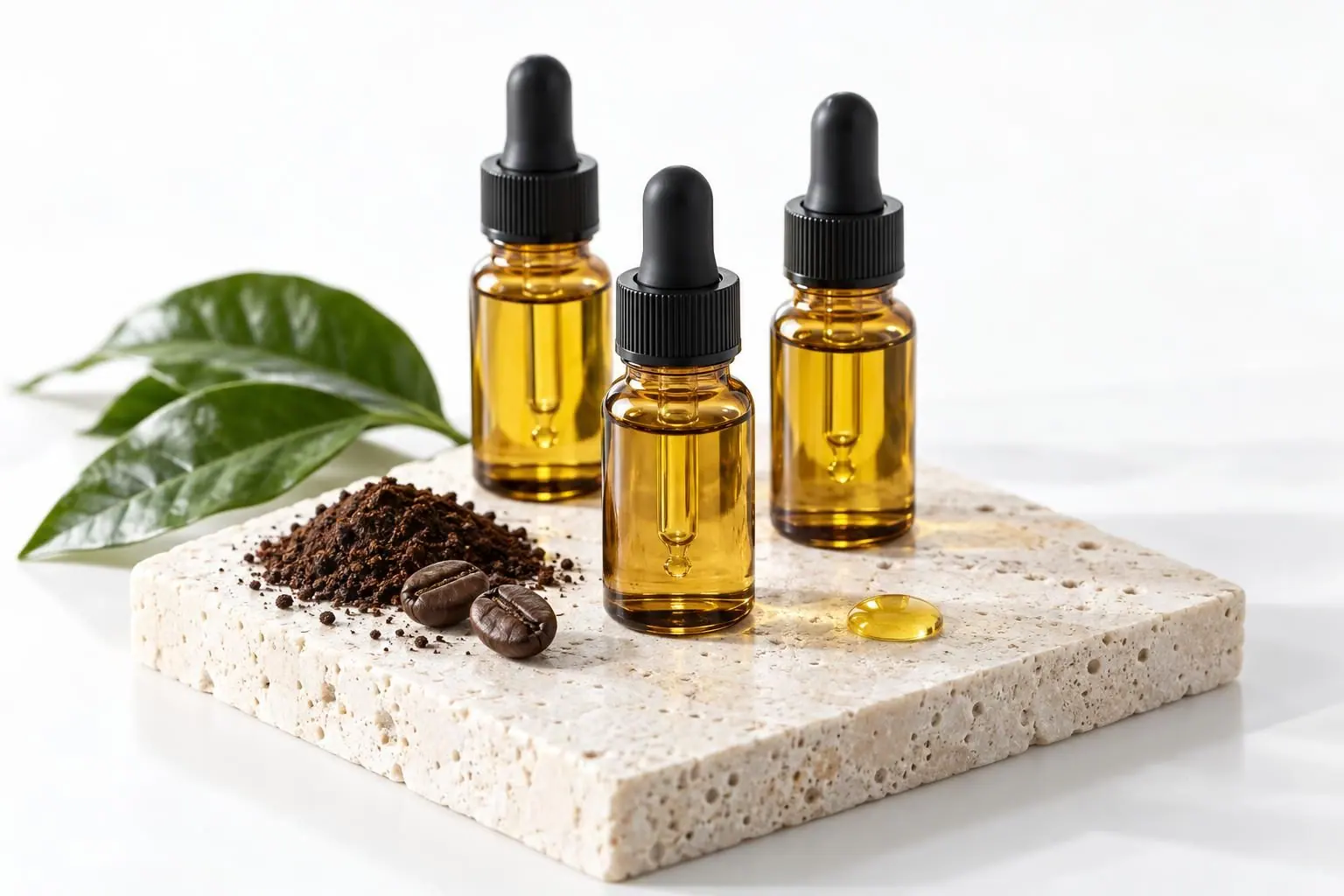
Coffee oil
Sold as a cosmetic ingredient for early cash flow.
-
STEP 3Activation
Porous carbon
Sold as deodorizer feedstock. Zero loss.
-
STEP 4Core R&D
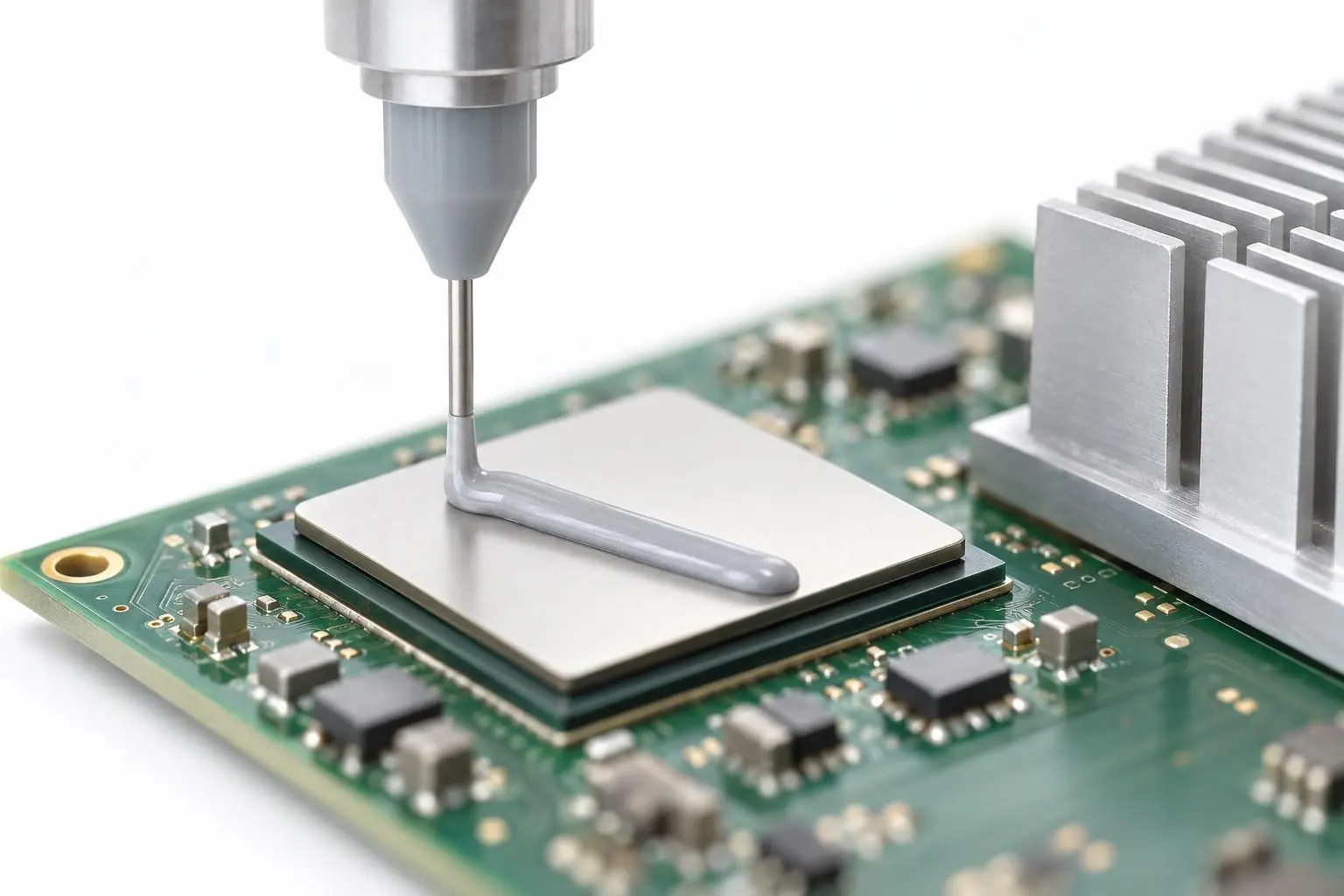
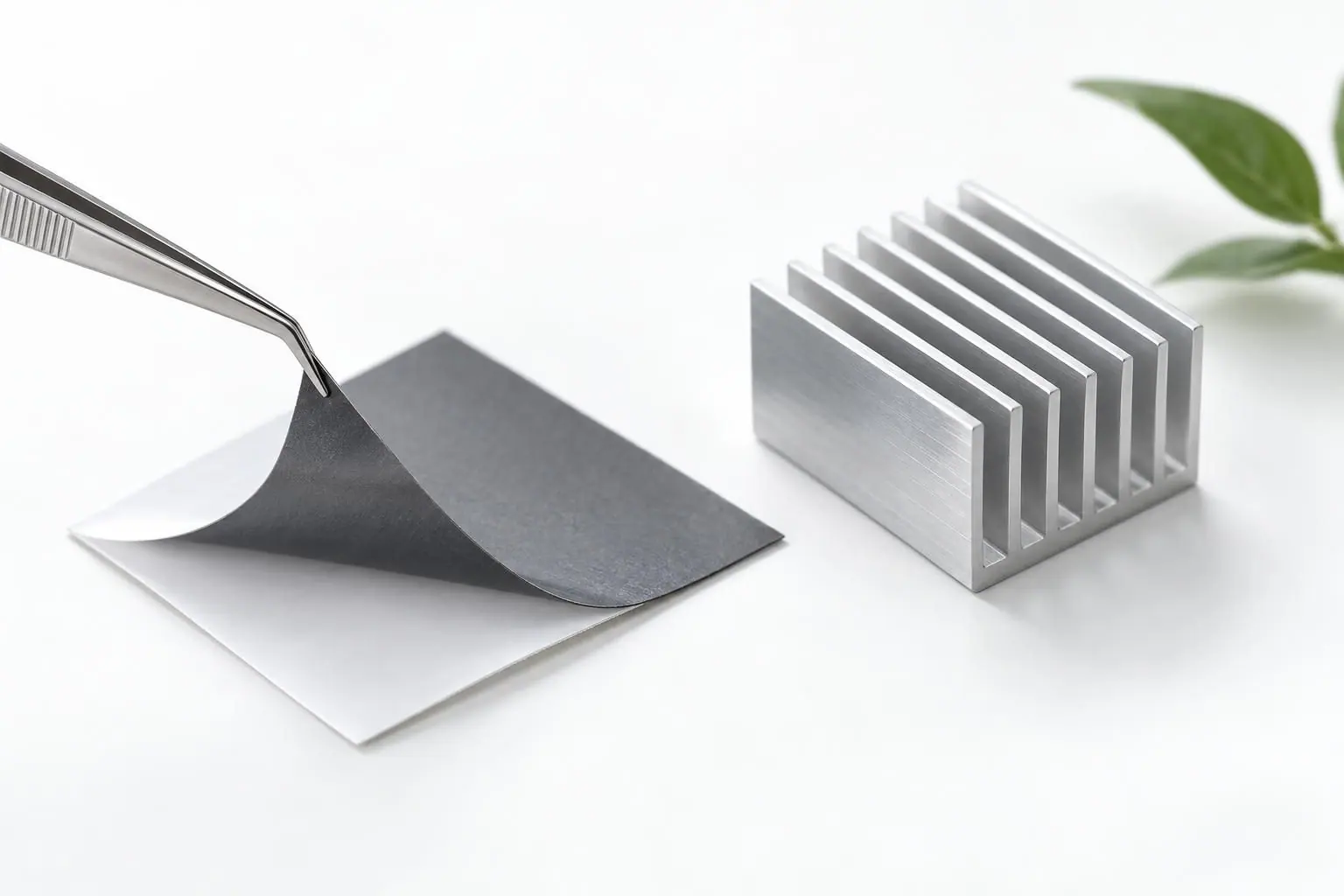
Thermal interface material
Cu-C filler with 12 W/mK, our main revenue.
- Efficiency: raw material reuse
- 100%
- Performance: revenue streams
- 3streams
- Value: coffee grounds supply (Jeonbuk, monthly)
- 1,000t
03Use
Supplied as deodorizer feedstock.
Micro and meso pores trap odor molecules. Revenue is reinvested in thermal materials R&D.
Beyond Cooling, Towards Green
From samples to joint research,let's start together
Sample requests, partnerships or investment. Leave a note and we will reply personally.